Opera's Living Legacy: Tradition, Transformation, Innovation
By Julie Zigoris
The Bay Area has always supported opera, and rewards for audiences are vast
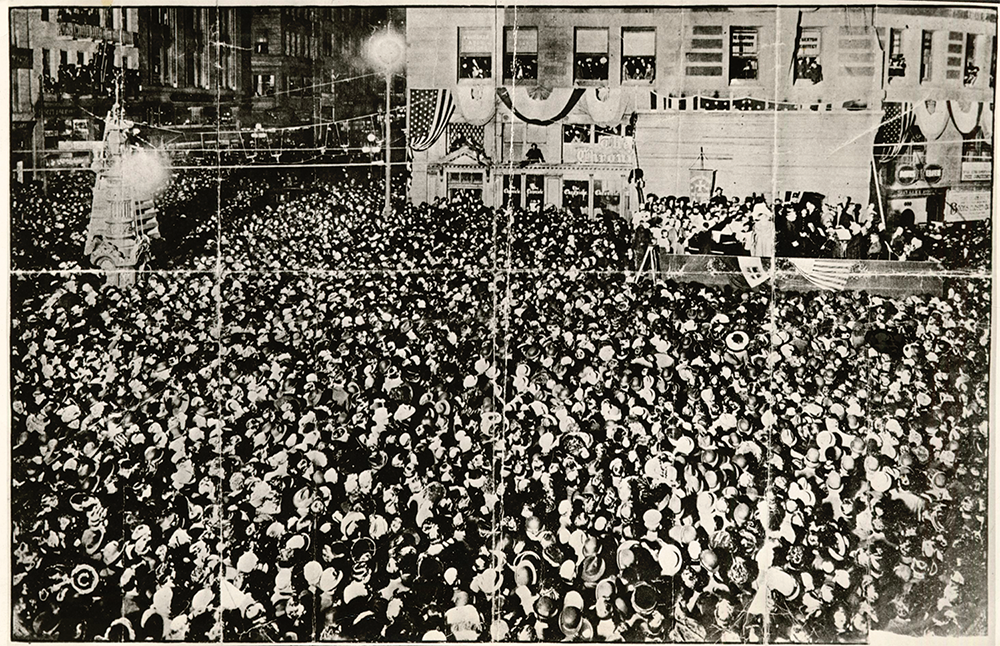
Soprano Luisa Tetrazzini singing before a crowd at an open-air concert by Lotta's Fountain on Market Street, San Francisco in 1910
Picture this: a throng of a quarter of a million people gathered in front of one of San Francisco’s most iconic landmarks to hear a celebrity give a rare free concert. The singer commands some of the highest prices in the music industry. No, it’s not Hardly Strictly Bluegrass or Outside Lands — it’s 1910, and opera singer Luisa Tetrazzini is performing “The Last Rose of Summer” to a crowd that includes many survivors of the Great Earthquake of 1906. Opera has been stitched into San Francisco since its very start.
“There used to be, believe it or not, small opera houses in most Gold Rush towns,” said David Stull, president of the San Francisco Conservatory of Music. “The idea was you are going to entertain all these people who were mining for gold, and it created this entertainment matrix.”
San Francisco Opera Director Matthew Shilvock (whose tenure as General Director of San Francisco Opera has just been extended to 2031) also pointed to the city’s Gold Rush roots when asked about the diversity of the region’s opera scene. “There is a deep passion for opera in the Bay Area, and I think it’s born out of the essential role that storytelling plays in frontier communities,” he said.
While cities like New York and Chicago garner attention as international centers of opera, it would be difficult to find a more diverse scene than the Bay Area’s. Want a classic opera, but in miniature? Try the Pocket Opera. Want to see an opera star on the cusp of becoming famous? Try Opera San Jose or check out the Merola Opera Program. Want a relaxed wine country atmosphere? Try Livermore Valley Opera. Want the country’s oldest continuously operating Gilbert and Sullivan company? Try the Lamplighters Theater. What about something that hasn’t been seen on stage for 400 years? Try Ars Minerva. For innovative and boundary-pushing, there’s Opera Parallèle. And that’s not even mentioning San Francisco Opera, the anchor company producing global opera stars since 1923.
“San Francisco, pound for pound, per capita, punches way above, embarrassingly above, the average New Yorker in how we support the arts,” Stull said, noting that New York has 10 times the population of San Francisco. This multiplicity of smaller opera companies, it turns out, is key to the art form’s survival in the Bay Area — as it allows for specialization and risk-taking.
“Smaller companies can take bigger risks than big companies can to a certain extent,” said Carrie-Ann Matheson, San Francisco Opera Center and Merola Artistic Director. “So I'm excited to see how people are really pushing boundaries on a grassroots level."
There’s a larger ecosystem allowing Bay Area opera to thrive. The San Francisco Conservatory of Music, where Opera Parallèle emerged from, plays a key role in seeding this field. The conservatory hosts the Merola summer training program, which launches opera singers, pianists and stage directors into the Bay Area scene (and beyond), which then feeds into the Adler residential program at the San Francisco Opera. Application numbers climb every year, with last year being the highest number ever, said Matheson.
“Old music gives us a strange and useful vantage point on the modern world,” says Peter Whelan, music director of the Baroque Philharmonia Baroque Orchestra and Chorale, a company built around the rare and specific specialty of period instruments and historically informed performance. “It lets us hear how people centuries ago wrestled with jealousy, grief, ambition, and hope, and realize how little has actually changed underneath the surface."
Yet how can a city obsessed with the future be so tangled up with an art form tied to the past? “This is a place that rewards experimentation,” Whelan adds. “There’s a deep, arts-curious audience, real philanthropic support and a spirit of independence.”
On the opposite end of the historical spectrum, the region supports multiple companies producing contemporary, cutting-edge operatic works: San Francisco’s Opera Parallèle and Berkeley’s West Edge Opera. For instance, in 2023 Opera Parallèle transformed contemporary chamber opera “Everest” into a 360-degree, animated graphic-novel film using motion-capture technology to turn live singers into digital avatars.
Next year, West Edge has three operas almost no one has heard of before: a world premiere, a newly created Baroque opera, and an American premiere that’s only been done in Europe.
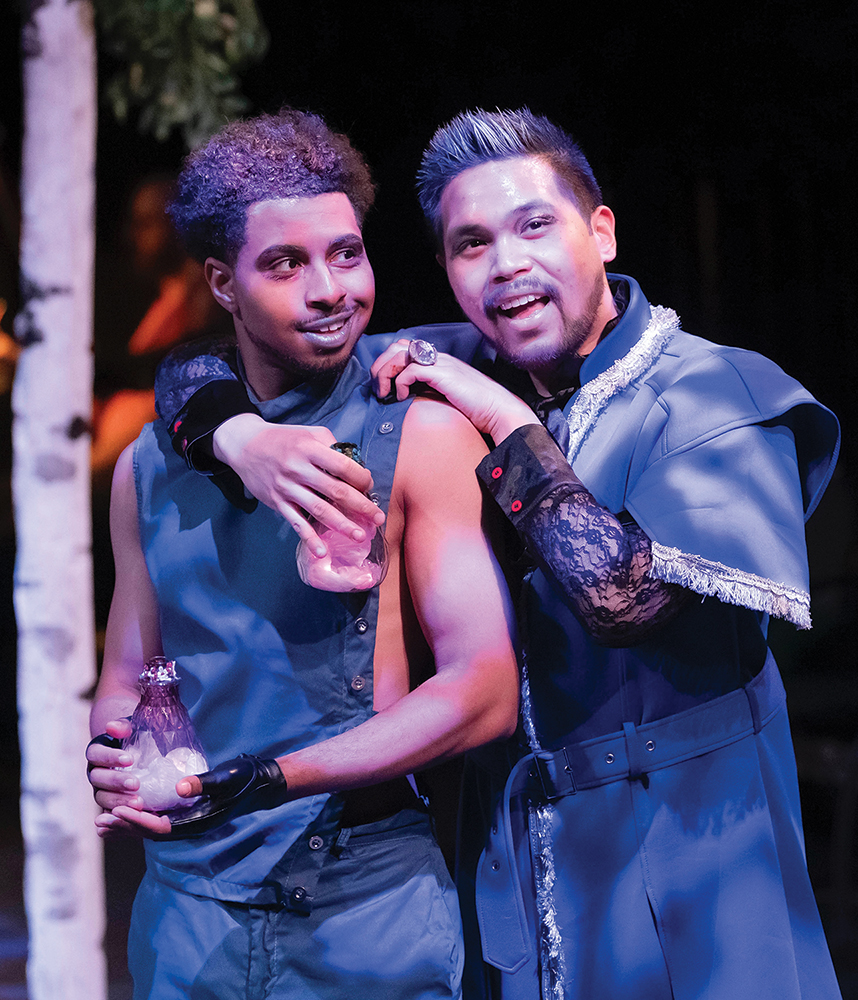
Pocket Opera's April 2026 production of "A Midsummer Night's Dream"
“There are people who like new experiences in the Bay Area, and part of that is from the tech attitude,” said Nicolas Garcia, Pocket Opera’s general director. “Pocket Opera is actually the original start-up of 40 years ago.
Even at the San Francisco Opera, where risk-taking can be a little more, well, risky, given its large size, there are numerous signs of recovery. The subscription rate increased by 12% this year, what Shilvock called “an unheard of statistic in the field.” The company is fresh off the sold-out success of the world premiere of “The Monkey King” and recently received an institution-changing $5 million annual recurring gift from Nvidia CEO Jensen Huang.
It requires a lot of resources to stage an opera production, which makes the business model inherently challenging. “Opera is a very expensive art form that demands quite a bit of philanthropy for it to function,” Stull said. And opera is not immune to the challenges all performing arts are facing, whether post-pandemic realities, shifting audience habits or rising production costs.
When Pocket Opera had a National Endowment for the Humanities grant pulled by the new administration, Garcia said, private donors stepped in to make up the difference. This is where smaller organizations can have an advantage, since they tend to get a larger percent of their funding through ticket sales. West Edge, for its part, relies more on individual giving rather than institutional philanthropy and has had a balanced budget for the past four or five years, says Mark Streshinsky, West Edge Opera's General Director.
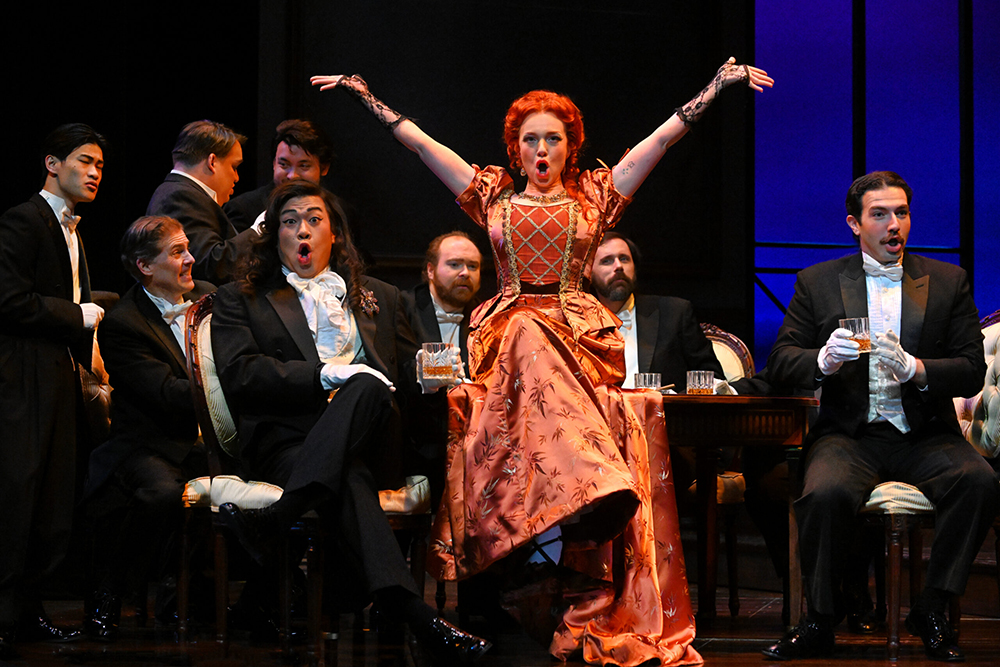
"La Traviata" by Opera San Jose April 2026 at the California Theatre, San Jose
Opera San Jose can offer its artists something incredibly valuable many other organizations can’t: Housing. The opera’s founder, mezzo-soprano Irene Dalis, who sang in all the great opera houses of Europe, had the foresight to invest in real estate. “Irene was not only a visionary artist, she was also a very shrewd businesswoman,” said Shawna Lucey, Opera San Jose’s general director and CEO. “When she started Opera San Jose, she bought not one but two apartment complexes here in downtown San Jose, so we house our artists in the most expensive housing market in the country.”
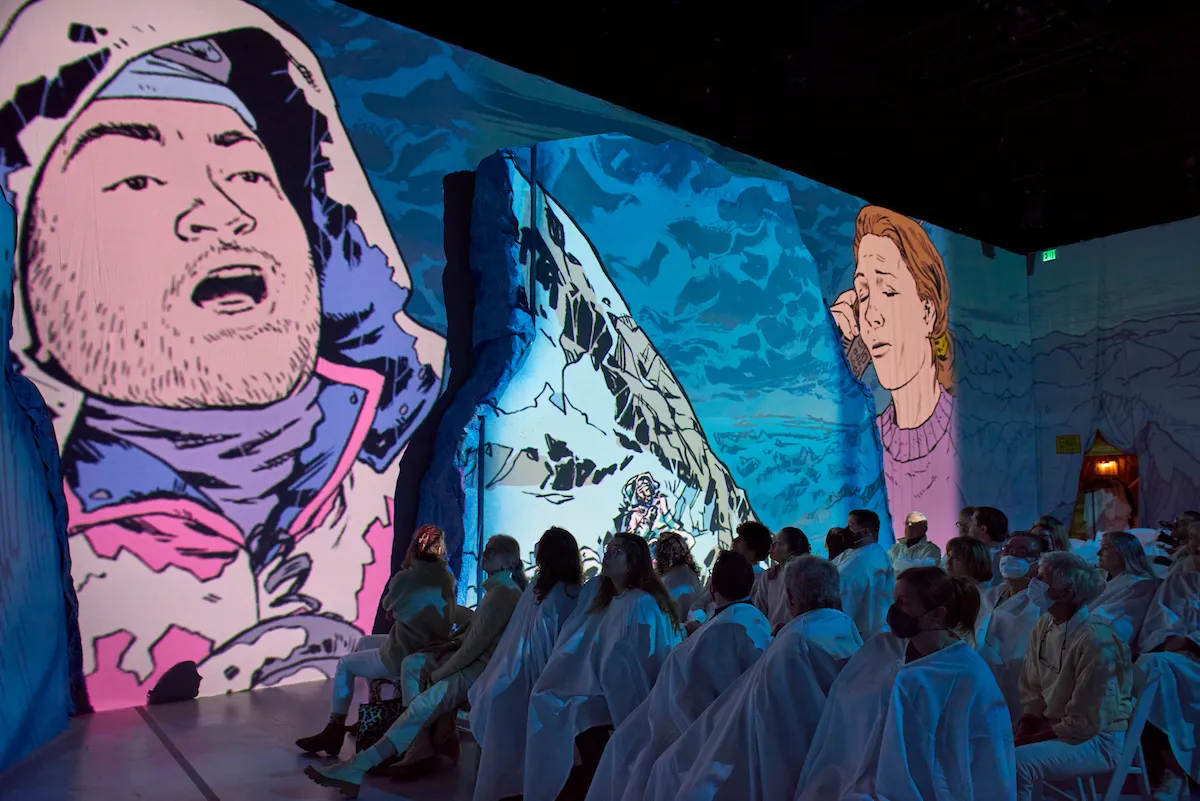
Opera Parallèle’s 2023 “Everest: An Immersive Experience” was a one-of-a-kind opera adventure held at Z Space and the Planetarium at California Academy of Sciences
While opera companies are moving tickets, filling seats and balancing budgets, they’re also reflecting on why their art form matters more than ever. “In a world moving so quickly, opera gives us something increasingly rare: the time and space to listen deeply,” said Nicole Paiement, founder and artistic director of Opera Parallèle.
“More and more people are turning to live experiences and ways to connect with their people,” Streshinsky said. “I rarely want to program an opera that doesn't have an intermission, because I want people in the lobby mid-show connecting and talking about what they're seeing.”
Northern California has the highest concentration of opera companies in one place within the national organization Opera America, and they decided to start their own organization, The Northern California Cohort of Opera Companies, to support each other. They created “Opera Day in the Bay,” which will take place on September 20 under the majestic redwoods at the base of the Transamerica Pyramid, and will be dedicated to the late Erie Mills of Livermore Valley Opera. From Baroque-era masterpieces of the 17th century to compelling contemporary and newly created operas, all 13 member organizations will contribute. Producer Céline Ricci says “Opera Day in the Bay exists because an extraordinary community of artists and organizations shared a vision that transcends any single company, creating something larger than ourselves — a celebration of opera that belongs to everyone.”
Instead of competing, opera companies are supporting each other. “We long ago realized the opera audience isn’t a pie, it’s not like you run out of a piece,” Garcia said. “The more we create, the bigger the pie actually gets, and the audience cross-pollinates.”
→ Opera Day in the Bay
September 20, 1pm - 5pm.
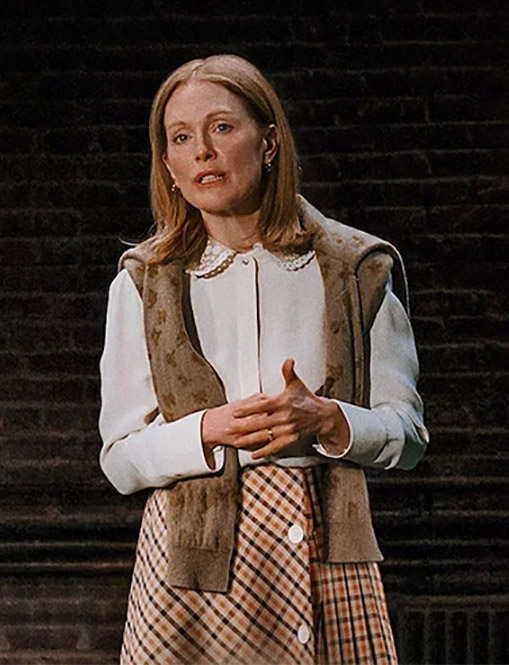
Main image" Soprano Stacee Firestone, San Francisco Conservatory of Music alumna, performs "Queen of the Night" from Mozart's "The Magic Flute" at SFCM in 2025