Fashion Takes Shape in Two Major Exhibitions
By Emily Wilson
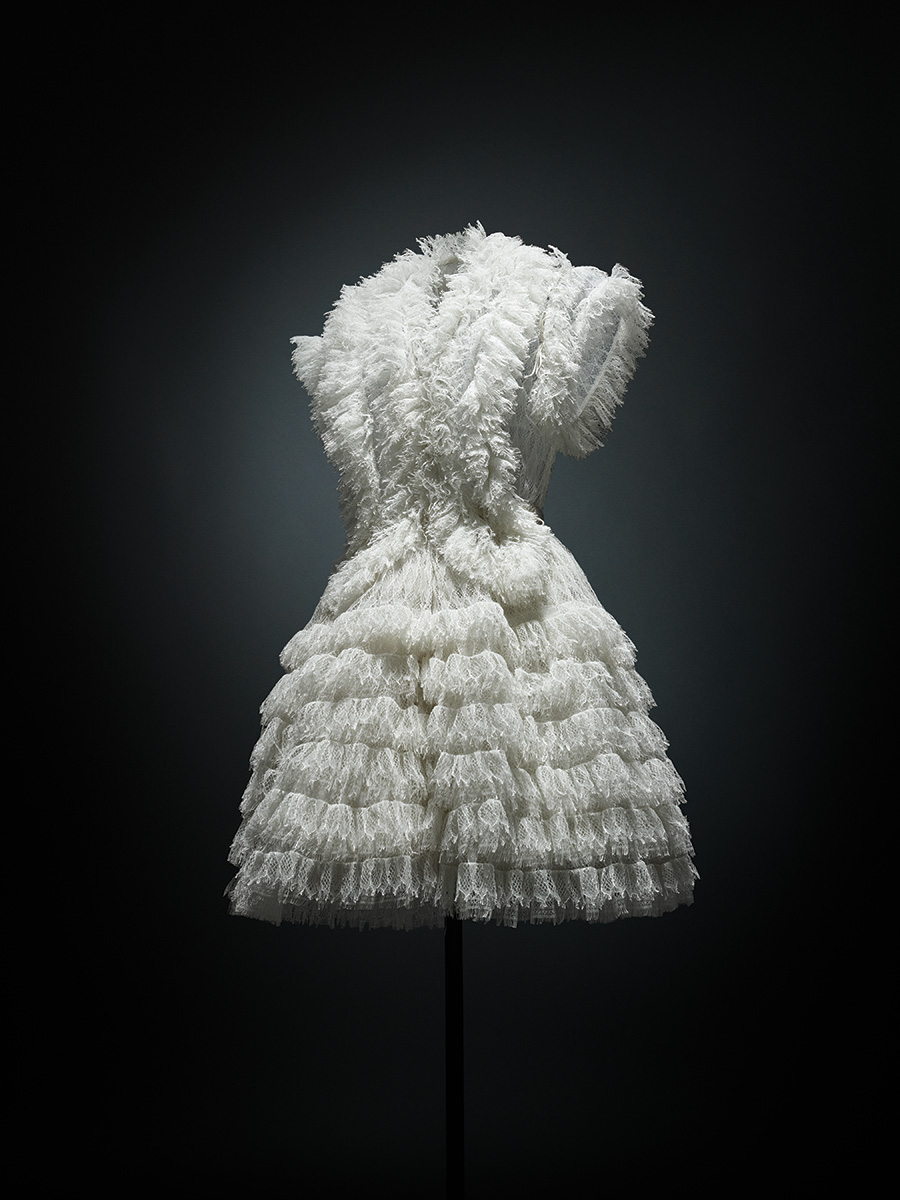
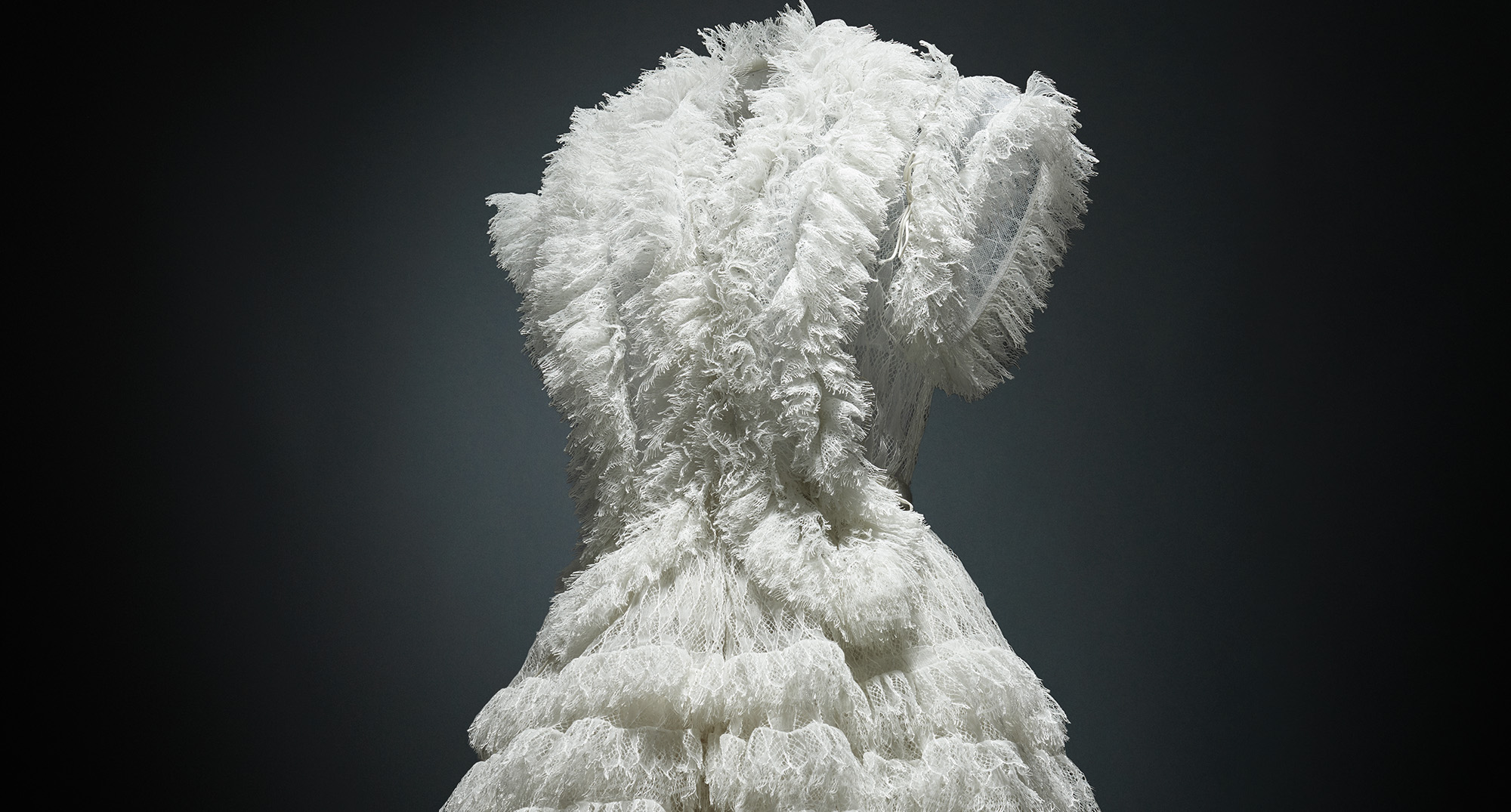
Azzedine Alaïa (1935 - 2017); Dress, Fall/Winter 2007 Haute Couture; Synthetic lace; Courtesy of Fondation Azzedine Alaïa. Photo © Andrea & Valentina
Fashion and sculpture have more in common than might first appear. Both begin with an idea of form, shape and proportion, and both can transform the way we see the human body. Two important exhibitions coming to San Francisco explore fashion's long-standing dialogue with sculpture, looking at the relationship from different angles and at the couturiers and sculptors who have shaped it. “Azzedine Alaïa: Sculpting Fashion,” at the Legion of Honor (through April 11), examines the work of a designer whose early training in sculpture informed his extraordinary approach to clothing. “Dior to McQueen: Fashioning Form,” at SFMOMA (May 15–Sept. 7), explores the shared approaches of couturiers and sculptors through a conversation between fashion and sculpture spanning the postwar era to today. Beginning with Christian Dior's iconic 1947 Bar suit, it is the museum's first fashion exhibition since its 1983 retrospective of Issey Miyake.
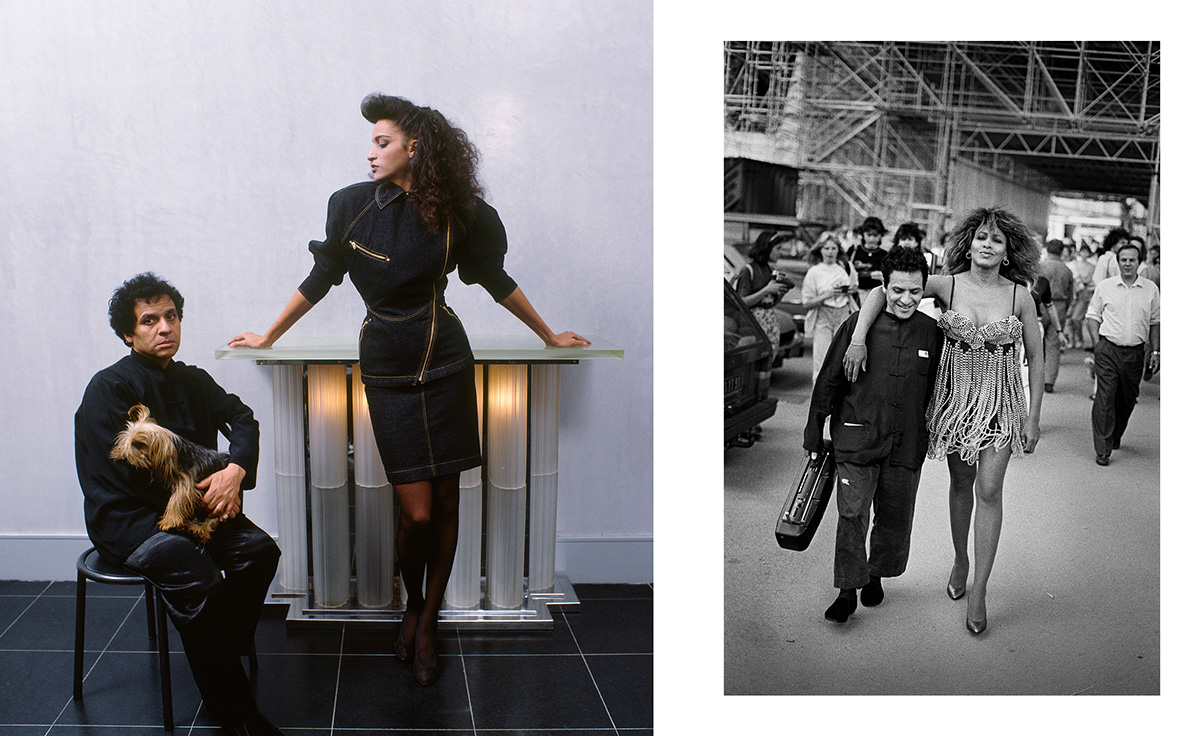
Designer Azzedine Alaia with model Farida. Photo by Jean-François Rault/Sygma via Getty Images.
R. Alaïa and Tina Turner, Paris, 1989. Photo courtesy of the Peter Lindbergh Foundation, Paris.
Laura L. Camerlengo, the curator in charge of costume and textile arts at the Fine Arts Museums of San Francisco, first came across Alaïa’s work when she was assistant curator at the Philadelphia Museum of Art and worked on an exhibition about designer Patrick Kelly, "Runway of Love," (which also came to the FAMSF in 2021) while researching Kelly’s peers (Alaïa and Kelly shared a leather distributor). When she realized Alaïa, who fashion lovers describe as a “virtuoso,” hadn’t had a major retrospective in the United States, she created one.
Organized with the Fondation Azzedine Alaïa, the exhibition will have almost 80 works of Alaïa’s, including designs worn by Tina Turner, Rihanna, and Grace Jones. Some of his dresses, coats, skirts, and suits will be displayed among the objects in the Legion of Honor’s permanent collection. The designer had a historic collection of thousands of pieces, which he said he kept as “a mark of solidarity with those who, before me, knew the pleasures and demands of the scissor,” and pieces from that collection will also be part of "Sculpting Fashion."
In a time when a lot of women’s fashion was baggy, Alaïa was known for accentuating women’s curves, and Camerlengo says the cut of his clothes was what first struck her.
“I was so impressed by the way he shaped his clothes, the craftsmanship and the way he thought about the dimensionality of the human form, particularly the form of women,” she said. “As I started to dive deeper, I learned about his sculpture in Tunisia and how that early training really informed how he created and sculpted garments through cloth.”
Alaïa added a year to his age on his admission form to get into the École des Beaux-Arts in Tunis, putting it down as 16. In classes, he learned about anatomy and creating bodies with clay. Alaïa’s sister taught him to sew and, needing money for his studies, he took up dressmaking, working with a local seamstress reproducing French couture for rich Tunisian women.
In his early 20s, Alaïa moved to Paris to undertake an internship with Christian Dior, but he lost the position after just a few days, Camerlengo says, since Tunisia was then fighting for independence from France. But he stayed in Paris and worked independently as a dressmaker for two decades. Many of his clothes were in the style of Christian Dior, Cristóbal Balenciaga, and Yves St Laurent, the curator says, but he found his own aesthetic when he started creating costumes for the Crazy Horse burlesque dancers in Paris.
“It required him to get in close and intimate to the body to take measurements and sculpt the clothes,” Camerlengo said. “Later, when he launched his brand, he worked directly on the models. Many of them described being happy to stand for hours, being pinched with pins because they knew he was making a masterpiece. He shaped everything directly on the body.”
Alaïa’s sculpted style stood out as well as his involvement in every part of a garment’s creation, from cutting the patterns to pressing the garments. This commitment to craftmanship meant that he presented collections when they were ready and didn’t follow the fashion calendar.
While this exhibition focuses on one designer and his training as a sculptor, the show at SFMOMA will have a number of couturiers’ work as well as pieces of sculpture.
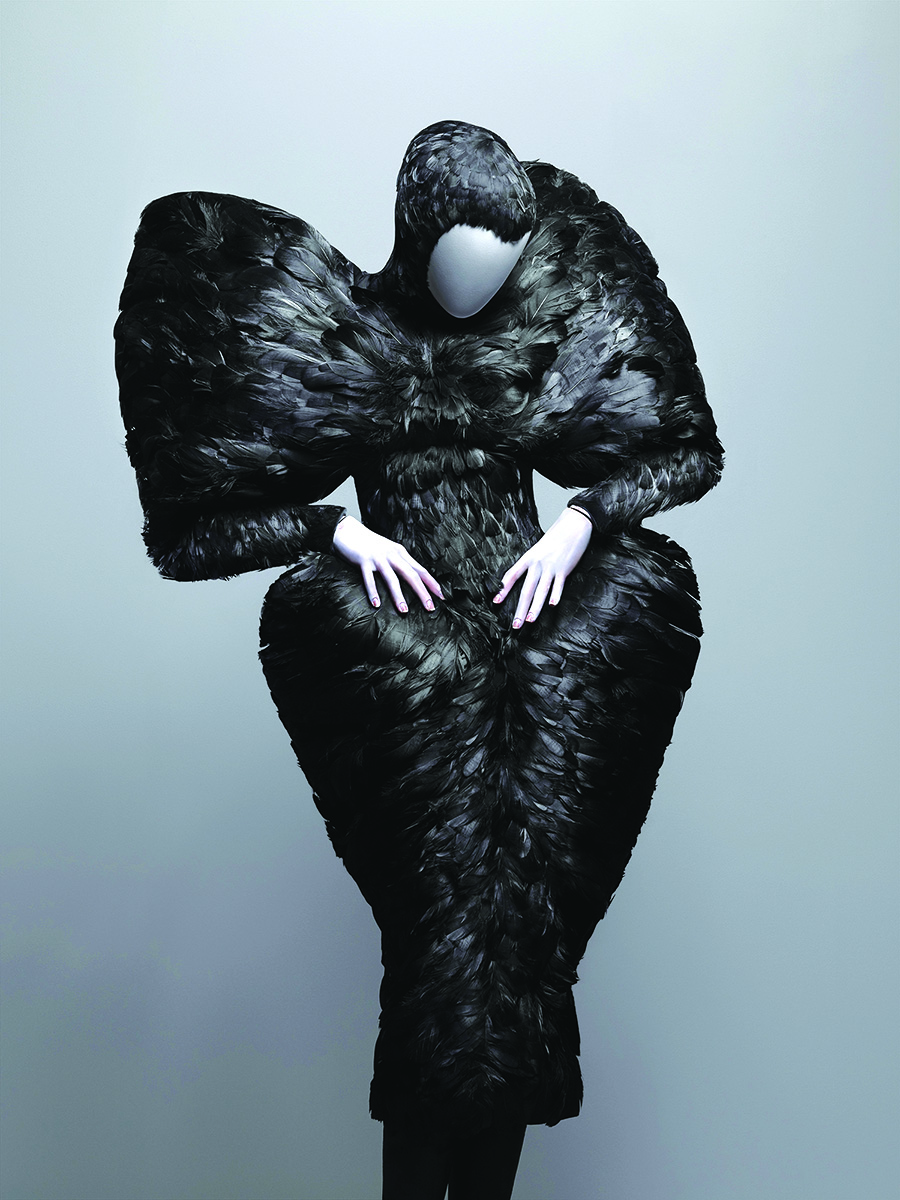
Alexander McQueen, Black feather ensemble, The Horn of Plenty collection, Autumn/Winter 2009. © Sølve Sundsbø
For the first fashion exhibition at the museum in more than 40 years, Ann Marguerite Tartsinis, curator of "Dior to McQueen," knew exactly where she wanted to start — with Christian Dior’s 1947 Bar suit, with a white jacket and black skirt. It was an iconic look, she says, seen as a return to a strict feminine silhouette with a tiny waist, boning, and padding. She will show it in conjunction with Louise Bourgeois' "Persistent Antagonism," (in the museum’s collection) part of a series where the sculptor based works on people she knew. Tartsinis says she wanted to highlight SFMOMA’s strengths as a postwar and contemporary art institution, and these two works showed what was going on at the time.
“While they are quite different in terms of one being fashion and one being sculpture, they're both thinking through how to abstract and conventionalize form,” she said. “In one case we're talking about a very literal human figure, and in the other case we're talking about something that is based on a human figure that is significantly abstracted.”
A section in the show deals with the parallels between the atelier and the studio, and shows, Tartsinis says, the collective nature of both, and how a group of people – for the designer, seamstresses and tailors, and the sculptors’ studio aides, work to support the vision of an individual.
Another similarity of the two professions is the toile, or test garment, and the maquette, or preliminary model. This section will have some of Henry Moore’s smaller bronze studies that shows him making versions and experimenting. It will also include Charles James, who made plaster mannequins for some of his clients, and would make toiles on these forms. This further blurs boundaries, Tartsinis says, showing how designers and sculptors think about design and the body in a similar way. James’ mannequins, she points out, are sculptures, made of plaster and paper mache.
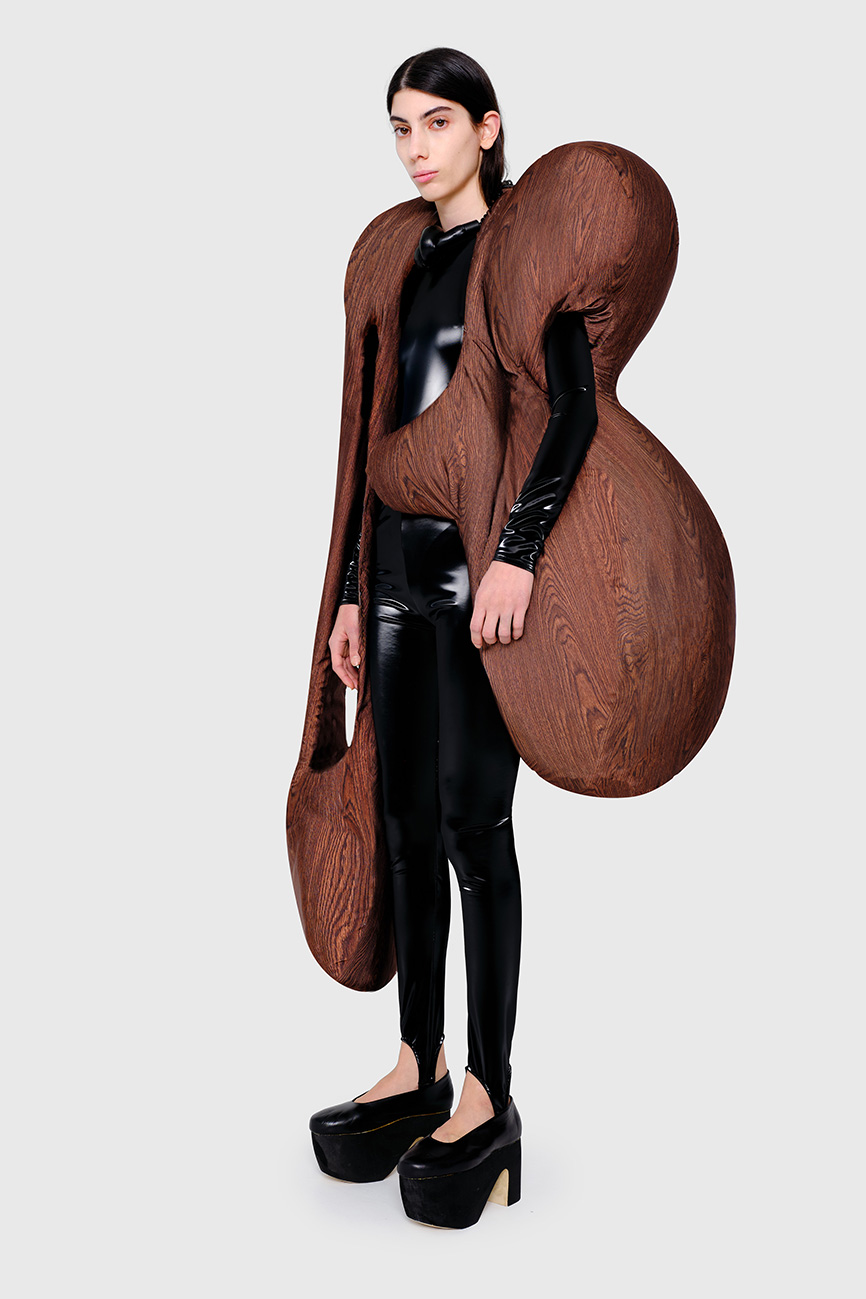
Melitta Baumeister, Autumn/Winter 2021, featured in "Dior to McQueen." Photo by Michal Plata, courtesy Melitta Baumeister.
Tartsinis, who started working on the show when she was the assistant curator of architecture and design at SFMOMA and is now the head of costume and textiles at Philadelphia Museum of Art, hopes that visitors don’t just come away from the exhibition with the idea that fashion is sculptural.
“I think there's a much more nuanced takeaway of thinking through how we celebrate the makers around us,” she said. “How we think about them, and why we put certain designers or artists in one category and others in another.”
“Azzedine Alaïa: Sculpting Fashion”
Legion of Honor, through April 11, 2027
“Dior to McQueen: Fashioning Form”
SFMOMA, May 15–September 7, 2027